Why Interfaces Are Where Risk Lives
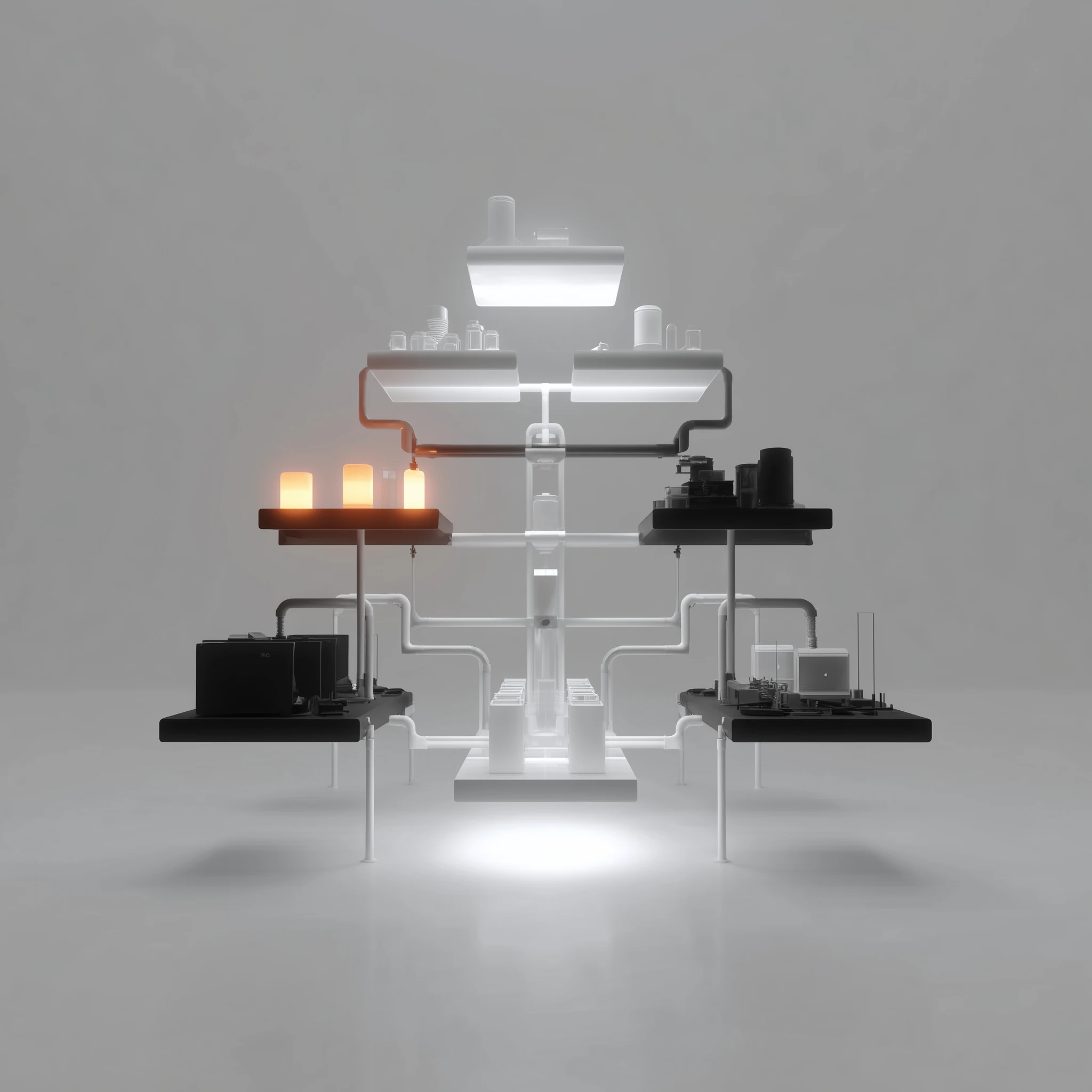
Interfaces are the invisible connective tissue of aircraft systems. Every sensor, actuator, display, and control input interacts through defined boundary points, electrical, software, mechanical, or procedural. When these interfaces are ambiguous or inadequately documented, programmes are exposed to cascading errors that can compromise functionality, safety, and certification readiness in ways that are difficult to detect and expensive to resolve. In the flight deck, a mismatch between display logic and sensor data can create conflicting alerts, delayed warnings, or misleading situational information at a critical moment. In avionics subsystems, an undocumented timing assumption at a data bus interface can produce intermittent behaviour that is almost impossible to isolate in post-hoc analysis.
The difficulty with interface failures is precisely their subtlety. Unlike functional failures, where a component does not perform its specified function, interface failures often produce behaviour that is locally correct but globally incorrect. Each subsystem may pass its own verification tests in isolation. The failure only emerges when subsystems are connected and begin exchanging real data under operational conditions. This is the pattern that produces the costly late-stage integration surprises that consistently threaten programme schedules.
Effective interface definition is not purely a technical activity. It is an organisational responsibility that must be established and enforced throughout the programme lifecycle. Teams must know who owns each interface, what data is exchanged, in what format and at what rate, under what operational conditions, and how changes are managed and communicated. Without clear ownership, integration becomes reactive rather than disciplined. Problems identified during system integration typically force costly redesigns of avionics, control panels, or software subsystems, and those redesigns trigger new verification cycles that consume schedule and budget that were allocated for other activities.
The earlier interfaces are rigorously defined and placed under formal configuration control, the fewer surprises emerge downstream. This is not a theoretical principle, it is a consistently observed pattern across aerospace programmes. Programmes that establish comprehensive interface control documentation early, and maintain it actively throughout development, achieve smoother integration, cleaner certification evidence, and more reliable system behaviour in service.
The Certification and Safety Dimensions
In high-assurance programmes, eVTOLs, unmanned aerial systems, and commercial transport aircraft, poorly managed interfaces also threaten certification directly. The FAA and EASA evaluate whether interface responsibilities are clearly assigned, formally documented, and traceable across all subsystems and across all applicable standards. Ambiguity in interface definition is not merely a technical deficiency, it is an assurance deficiency. It signals to certification authorities that the development organisation cannot fully account for how its systems interact, which raises fundamental questions about the completeness of the safety case.
Interface ambiguity can trigger requests for additional audit evidence, supplementary verification tasks, or in some cases redesign, resulting in schedule slippage and budget overruns that compound as the programme matures. These are not edge cases. They are among the most common sources of certification programme delays, and they are almost entirely preventable through disciplined interface management from the outset.
Interface failures often manifest as latent hazards rather than obvious functional failures. During simulation or early integration testing, they may not trigger clear fault indications, but can degrade system reliability, response times, or data integrity in ways that only become apparent under specific operational conditions. Flight deck systems that rely on multiple interdependent sensors, processors, and displays are particularly sensitive to this failure mode. Even minor timing mismatches or undocumented assumptions between avionics modules can propagate across subsystems, affecting pilot situational awareness and overall aircraft performance in ways that a standard test regime will not capture.
The most dangerous interface deficiencies are those that are only exercisable in edge-case operational scenarios, scenarios that may not appear in standard test plans but which are precisely the conditions under which aircraft safety is most critical. Rigorous interface hazard analysis, conducted early and updated as the design evolves, is the mechanism by which these latent risks are identified before they become operational hazards.
The MORPHEUS Approach to Interface Management
Successful programmes treat interface management as an ongoing engineering discipline, not a one-time deliverable. Interfaces are defined early, independently verified continuously, and formally updated whenever requirements or designs evolve. Configuration management ensures that all interface changes are documented, traceable, and communicated across all affected teams. Verification activities validate that interfaces behave as designed under all operational conditions, including failure modes, degraded states, and edge-case scenarios that are not captured in nominal test plans.
Organisations that neglect interface discipline consistently find themselves reacting to failures rather than preventing them. The cost of this reactive posture compounds rapidly. Each interface deficiency discovered during integration requires diagnosis, root cause analysis, design modification, re-verification, and re-release of the affected configuration baseline. When multiple interface deficiencies interact, as they frequently do in tightly coupled avionics systems, the remediation effort can consume entire programme quarters.
At MORPHEUS, interface management is embedded in the core engineering process as a primary discipline, not a secondary activity performed between design and integration milestones. Flight deck and avionics teams operate within a structured framework that ensures every system interaction is defined, traceable, and independently verified. Responsibilities are unambiguous. Dependencies are mapped through rigorous interface control documentation that is actively maintained and configuration-controlled throughout the programme lifecycle. Verification is thorough, objective, and designed to challenge interface assumptions rather than simply confirm them.
By treating interfaces as a primary component of development assurance rather than a technical footnote, programmes gain confidence in their avionics architectures, flight deck systems, and control logic, transforming one of the most common sources of programme failure into a foundation for safety and certification success.